Sage Fischer · 2 September 2026
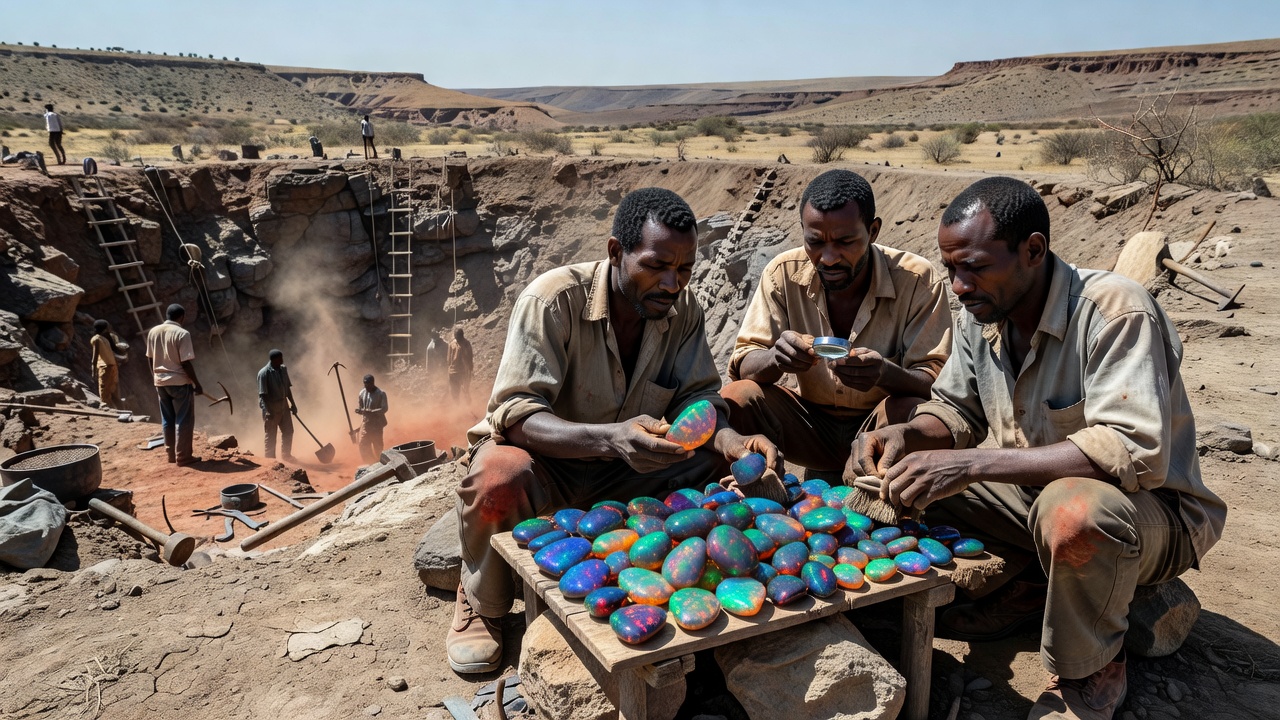
Miners in Ethiopia's northern regions have reported unprecedented yields of black opal this quarter, with several sites exceeding previous production records by over 40 percent. The gemstones, prized for their dark body tones and vivid play-of-color, are emerging from volcanic deposits previously considered low-potential. Local cooperatives attribute the surge to improved excavation techniques and favorable seasonal conditions that exposed new veins.
Yield Figures and Extraction Methods
Official tallies from the Ethiopian Ministry of Mines indicate more than 850 kilograms of gem-quality black opal extracted since January, compared with 600 kilograms for the same period last year. Teams working near the Wegel Tena area have recovered nodules displaying intense reds, greens, and blues against near-black backgrounds. Miners employ selective hand tools to preserve delicate color patterns, followed by careful washing and sorting at on-site facilities. Geological surveys suggest these deposits formed under unique pressure conditions that enhanced silica layering, resulting in stronger iridescence than earlier Ethiopian finds.
Quality assessments conducted by independent gem laboratories confirm hardness ratings between 5.5 and 6.5 on the Mohs scale, suitable for cabochon cutting and jewelry settings. Several parcels have already been exported to cutters in Thailand and India for further processing.
Market Response and Future Outlook
International dealers note steady demand for the new material, with preliminary auction prices averaging 15 percent above comparable Australian black opal lots. Ethiopian producers emphasize sustainable practices, including site rehabilitation and community revenue sharing, to maintain long-term viability. Industry analysts project continued output growth through next year if current vein continuity holds. Collectors and designers are monitoring supply closely, anticipating fresh designs that highlight the stones' distinctive dark brilliance and Ethiopian origin story.
Training programs for local miners focus on fracture detection and color grading to reduce waste. Government officials are reviewing licensing expansions for additional claims while enforcing environmental safeguards. The combination of volume and quality positions Ethiopia as an emerging source capable of influencing global opal availability without displacing traditional producers.